AI in Saudi Arabia is becoming part of the Kingdom’s economic and digital transformation, not simply a future trend. With 2026 officially designated the “Year of Artificial Intelligence,” organizations are operating in an environment shaped by national investment, stronger digital infrastructure, and growing demand for practical AI use cases.
The Reality of AI in Saudi Arabia Today
.webp)
Saudi Arabia has strengthened its position in data and AI through SDAIA, national strategy, infrastructure investment, and talent development. SDAIA’s current AI overview highlights the Kingdom’s growing international standing, including strong results in AI policy, model development, and sector growth.
For businesses, this creates a more supportive environment for automation, intelligent assistants, and data analysis. But readiness does not come from tools alone. Companies still need clear data, defined workflows, and measurable objectives.
Key readiness factors include:
- Expanding digital infrastructure.
- Greater investment in local AI capabilities.
- Stronger links between AI and the digital economy.
- Growing demand for Arabic-aware solutions.
A stronger technology environment does not remove the need for good implementation. Businesses should assess data quality, integration requirements, governance, and team responsibilities before scaling AI.
AI and Vision 2030
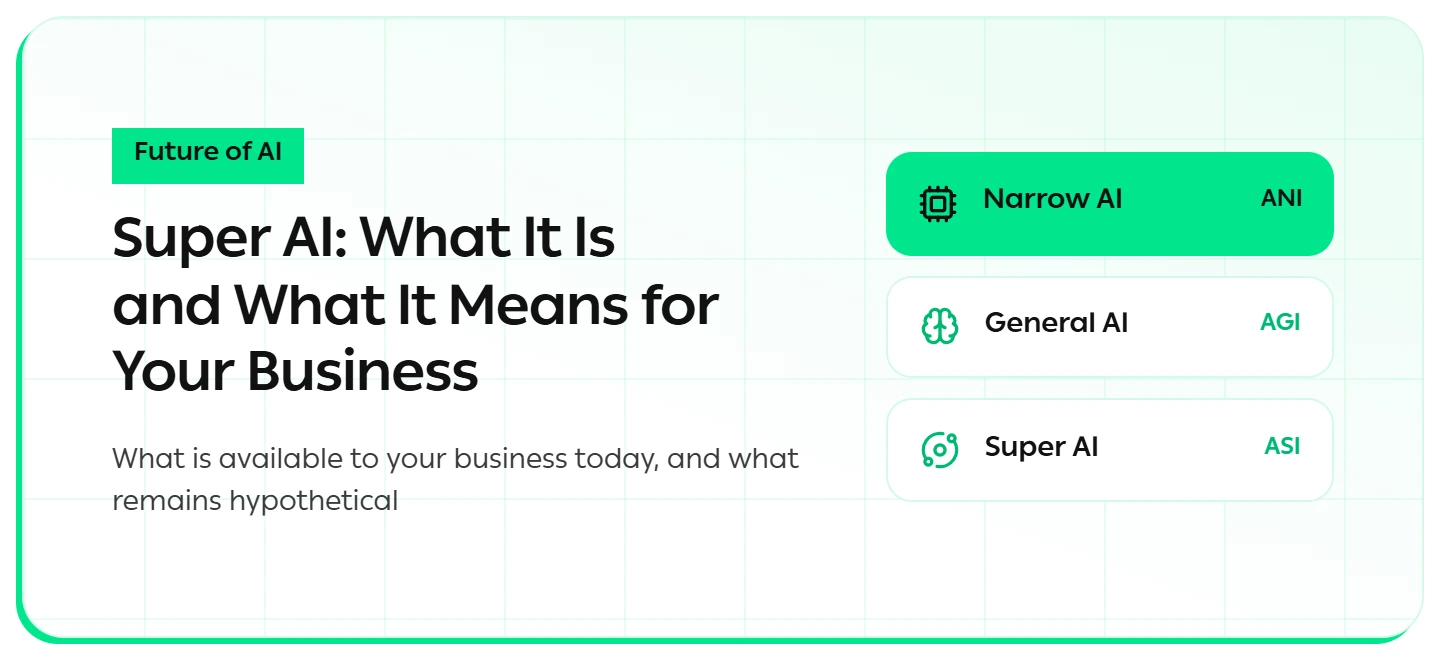
AI and Vision 2030 are closely connected to economic diversification, productivity, and the development of knowledge-based industries.
One major example is HUMAIN, a PIF company launched in May 2025 to build capabilities across the AI stack, including data centers, cloud infrastructure, advanced models, and applications.
For organizations, this means the future of AI in Saudi Arabia will involve both global technology and locally developed capabilities. Businesses should compare platforms based on output quality, Arabic support, security, integration, and operating cost rather than choosing a solution simply because it uses AI.
Key AI Applications in Saudi Arabia
.webp)
AI applications in Saudi Arabia are most valuable when they solve a specific operational problem.
Common use cases include:
- Automating repetitive customer requests.
- Analyzing data to identify patterns and opportunities.
- Forecasting demand or risk.
- Personalizing messages and recommendations.
- Connecting channels and systems into one customer journey.
Government and Smart Cities
Government entities can use AI to improve digital services, classify requests, analyze service data, and reduce manual procedures.
Projects such as NEOM also make smart-city use cases increasingly relevant. NEOM is developing advanced digital infrastructure for connected urban environments, while THE LINE describes automated services powered by AI.
The goal is not simply to collect more data, but to convert data into decisions and actions that improve service delivery.
Financial Services and Healthcare
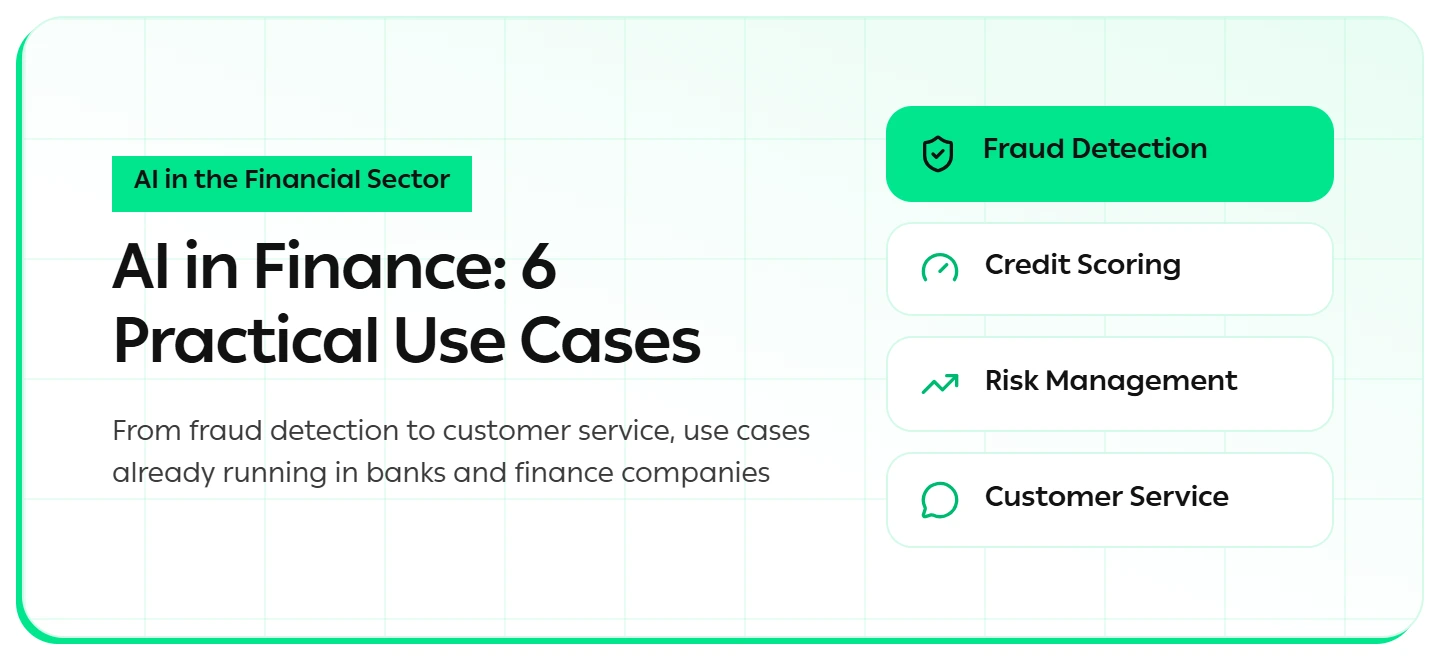
In financial services, AI can support risk assessment, fraud detection, document processing, and customer-service workflows. These applications are especially useful when they help teams identify patterns faster while maintaining human review for sensitive decisions.
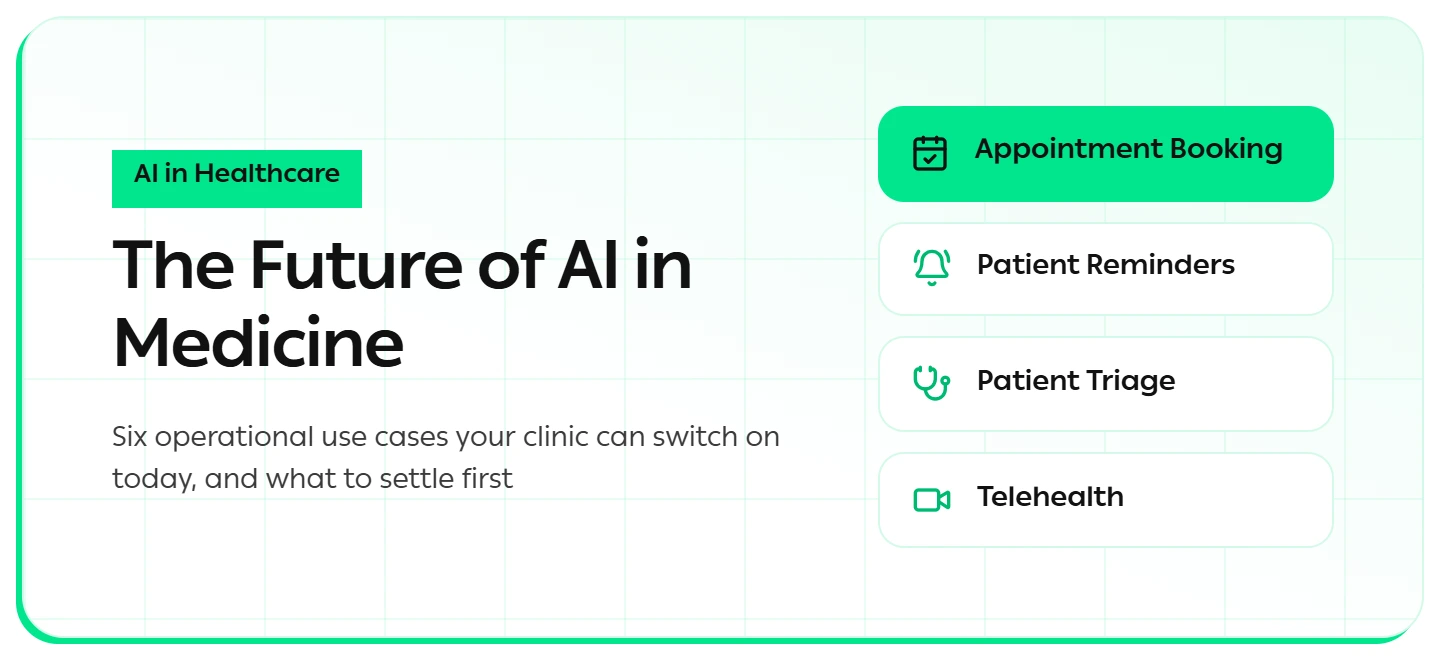
In healthcare, AI is better suited to clearly defined administrative and communication tasks such as appointment management, reminders, and general inquiries. AI chatbots can handle routine questions and route complex or clinical cases to qualified teams.
Commerce and Customer Service
Commerce is one of the clearest areas for AI adoption because it directly affects the customer journey. Businesses can use Whatsapp Business API to answer questions, follow up with leads, recommend products, and send order updates.
An omnichannel platform can bring conversations into one workspace, while integrations connect those conversations with CRM, commerce, or other systems.
In the Saudi market, Arabic and local context can materially affect the quality of automated conversations, making language support an important part of platform selection.

How Can Your Organization Prepare for the Future of AI in Saudi Arabia?
Start with the business problem, not the technology. Identify where time is being lost, where customer requests repeat, or where teams lack fast access to useful data.
Then:
- Define one measurable performance goal.
- Choose a platform that supports Arabic and integrates with your systems.
- Run a focused pilot.
- Review output quality and risks.
- Train employees to manage AI-supported workflows.
- Expand only after the use case proves its value.
Organizations should also define who reviews AI outputs, what data the system can access, and when a decision must move to a human. SDAIA’s responsible-AI work emphasizes governance, privacy, risk reduction, and ethical deployment as adoption expands.
Conclusion
AI in Saudi Arabia is becoming part of the Kingdom’s digital economy and operating environment. The strongest opportunity for businesses is not to adopt AI simply to keep up, but to use it where it solves a real problem and produces a result that can be measured.
Start with one use case, evaluate the impact, and expand based on evidence.

FAQs About AI in Saudi Arabia
1. Is AI in Saudi Arabia suitable for small and medium-sized businesses?
Yes. SMEs can begin with focused applications such as customer-service chatbots, WhatsApp automation, data analysis, or repetitive workflow automation without building large AI infrastructure.
2. What should companies consider when choosing an AI platform?
Companies should evaluate the business use case, Arabic support, integration capabilities, security, output quality, scalability, and how easily the results can be measured.
3. How can companies measure AI success?
AI projects should be measured against the goal they were designed to improve. Relevant metrics can include response time, conversion rate, number of automated tasks, operating cost, service quality, and customer satisfaction.
4. Does a company need a large technical team to adopt AI?
Not necessarily. Many organizations can start with a limited pilot using existing platforms, then expand gradually once the process, data requirements, and expected results are clear.
5. Why is Arabic and local context important?
Automated experiences depend on understanding meaning, phrasing, and intent rather than translating individual words. Strong Arabic and local-language support can help AI systems interpret Saudi customer requests more accurately and respond more naturally.